Thursday, October 28, 2004
Generative Methodology Thread
[1] ß Discussion between Peter
Stephenson and Paul Prueitt
[3] ß Discussion on the Adi framework for knowledge processors
White Paper on Incident Information Orb
Architecture (IIOA) à
Adi Structural Ontology Part I
à
We will be able to see, for the first time, the paths of discourse used
to recruit new members to those forms of radical Islam that have declared a
holy war on the Western way of life.
BCNGroup Founding Committee
October 27, 2004
<This bead is a section copied from Chapter 3, Knowledge
Foundations, Section 6>
“Documents can be classified by user validated aggregations of computed
themes. This is done by linking the representations of documents to semantic characteristics
that are encoded at the level of the theme structure and combining this
information with a study of the co-occurrence of themes and the contextual
category if that is known.
“We have developed an additional capability. This capacity is to provide
a unique situational analysis based on the relationship of part to whole as
revealed by the extension of Mill’s logic presented in chapter 9. To understand
this capability, we return to the definition of Pospelov’s formal systems (Situational
Control , pg 36):
“Definition: The term formal system refers to a four-term expression:
M = < T, P, A, R>
where T = set of basic elements, P = syntactic rules, A = set of
axioms, and R = semantic rules.
“The interested reader can refer to Situational Control for a
more detailed treatment of formal systems. For our purposes we need only refer
to a figure from page 37.
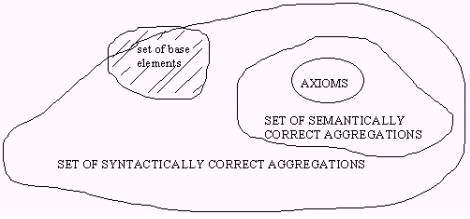
Figure 6: Taken from Figure 1.8, Situational Control pg
37)
“In figure 6, the set of base elements T are combined in various ways
to produce three type of sets, axioms, semantically correct aggregates, and
syntactically correct aggregates. We should remember that mathematical logic is
founded on a similar construction and therefore that most of the results of
mathematical logic will somehow apply later on to the theory of knowledge
processing that we are constructing. For example, the set of axioms can be
specified to consist of independent, non contradictory and self evident
statements about the set of base elements T. The axioms are our analog to the
quantum mechanical substrate that gives rise to the mechanisms that in turn
produce some of the material and energetic constraints that are involved in the
creation of awareness.
“Rules of inference can also be formulated to maintain notions about true
or false inference from assignments of a measure of truth to the axioms. The
set of syntactically correct aggregations of elements of base elements can be
defined either by listing or by some implicit set of rules. The semantically
correct aggregations could then be interpreted as those syntactically correct
aggregations that have an assignment of true as a consequence of the inference
rules. However, this interpretation is only one of a number of interpretations
for the formal relationships between T, P, A, and R.
“We have found a simplification of theory. Pospelov himself notes that
the axiom set can be the same as the set of semantically correct aggregations.
In this case the rules of inference need not be known, but we certainly will
lose the property that the axioms be independent and the axiom set be minimal
in size. In the case where the system under study is a natural complex system,
such as a national economy, there is no fully understood set of inference
rules. One can only observe that national economies experiences modal changes
from one condition into another. Each condition can be defined
"phenomenologically" as a semantically correct aggregation of an
unknown or partially unknown set of base elements. We view only the surface features.
Given this caveat, we will define the following formal model.”
<This bead is a section copied from Chapter 3, Knowledge
Foundations, Section 6>